
Blepharoplasty (Eyelid Surgery)
Open your eyes to a youthful look
What is Blepharoplasty (Eyelid Surgery)?
Blepharoplasty is a rejuvenating eyelid surgery that removes excess skin, muscle, and fat. Many people have eyelid surgery to reverse the effects of aging and rejuvenate their face. Blepharoplasty makes the eyes look younger, wider, more alert, and more feminine.
It is also done as a component of Facial Feminization Surgery.
The eyes are the window to the soul, but they are also one of the first parts of your face to age noticeably. Small changes in your eyelids can make a big difference!
Types of Eyelid Surgery
Dr. Zukowski performs three types of eyelid surgery:
- Traditional Upper Eyelid Blepharoplasty – Done to remove excess skin/fat/muscle in the upper eyelid.
- Traditional Lower Eyelid Blepharoplasty – Done to remove excess skin/fat/muscle in the lower eyelid. Typically there is a lot of skin to be removed.
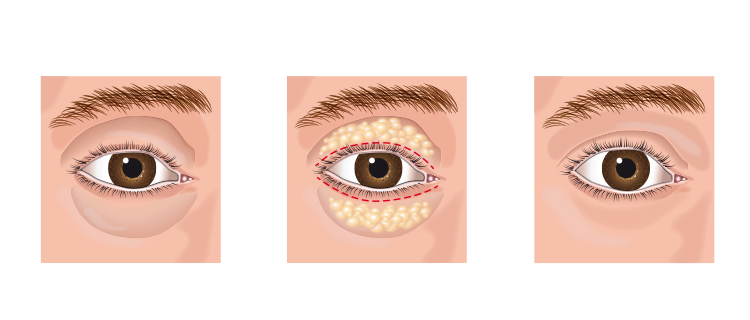
- Transconjunctival Lower Eyelid Blepharoplasty with Acid Peel – Done when the patient has fine or moderate wrinkles, dark circles, and puffiness (caused by fat) under the eye. Includes a 35% TCA chemical peel to the lower eyelid to help “shrink” the skin, increase new collagen and elastin, and remove dark circles under the lower eyelid.
Depending on your anatomy, he will typically combine either Traditional Upper with Traditional Lower, or Traditional Upper with Transconjunctival Lower Blepharoplasty.
Eyelid Surgery Risks
Eyelid surgery is safe for the majority of patients. It carries the risks associated with all surgeries such as a reaction to anesthesia and infection. Additionally, you may experience temporarily dry or irritated eyes, difficulty closing your eyes, or temporarily blurred vision.
Is Eyelid Surgery Painful?
There is very little pain involved in eyelid surgery. You will be under local, twilight, or general anesthesia during the surgery and will be comfortable. After the surgery, you may experience some minor discomfort associated with bruising and swelling, which typically fades in 7-10 days.
How to Prepare for Eyelid Surgery
As with all surgeries, Dr. Zukowski and his staff will advise you on how best to prepare. You will be asked to stop using tobacco products 14 days before surgery, and you may be asked to stop taking certain medications. You will have at least one pre-operative appointment, and you may need a vision exam from your eye doctor if you wish for your insurance company to cover this surgery.
What to Expect (Before, During, After) Eyelid Surgery
Before: As with any surgical procedure, Dr. Zukowski will examine you and ask questions about your medical history, health habits, current medications, and drug and tobacco use. You may need to stop taking certain medications 14 days before your surgery such as aspirin, ibuprofen, or various prescription drugs.
During: During the surgery you will be under local and twilight anesthesia if having only eyelid surgery, or under general anesthesia if combining it with various other procedures. Dr. Zukowski will make small incisions and remove excess fat and skin according to which type of eyelid surgery he is performing on you. He will close the incisions with sutures, except when performing Transconjunctival Lower Eyelid Surgery, which requires no stitches.
After: There is little pain associated with eyelid surgery, but swelling and bruising usually lasts 7 -10 days. Immediately after your surgery, you will need to use lubricating ointment and cold compresses. Full healing is normally achieved within a few months. Your eyes will be sensitive to the sun, so you will need to avoid extreme exposure to the sun by using darkly tinted sunglasses until you are fully healed. Dr. Zukowski will give you thorough instructions on how to care for your healing eyes for the best possible recovery.
Eyelid Surgery Recovery
Swelling and bruising from eyelid surgery usually lasts 7-10 days. Full healing is normally achieved within a few months.
Immediately after the surgery, you will most likely experience swelling and bruising, as well as some discomfort. You may also experience light sensitivity and blurred vision with the lubricants. You will be instructed to avoid strenuous activity and certain medications for at least a week. A cool compress and sleeping with your head elevated will help with the swelling. If you use contact lenses, you won’t be able to wear them for at least two weeks after your surgery.
Eyelid Surgery Scarring
The scarring from eyelid surgery ranges from slight to non existent. Because the skin of the eyelids is so thin, scarring is minimal to begin with and post-surgical scars often fade to become invisible. Traditional upper eyelid surgery leaves a fine scar well hidden in the natural eyelid crease. Traditional lower eyelid surgery leaves a small scar just below the eyelashes that will eventually fade. Transconjunctival lower eyelid surgery is scarless, as it’s done through an incision inside your eyelid. It’s not visible on your face and it’s so small that you don’t even need stitches!
If you have any concerns or questions about blepharoplasty (eyelid surgery), please don’t hesitate to contact our office in Chicago.
Visit the patient gallery to see before and after transformations.